

drdeborjyotipal, Author at Dr Deborjyoti Pal - Page 2 of 4

WhatsApp-Image-2022-09-19-at-11.14.04.jpeg
19/Sep/2022

WHY DO POSTPARTUM EXERCISE?

• Increase strength & tone in your abdominal & pelvic muscles.
• Lose weight.
• Can help to attain good sleep.
• Postpartum Exercise refreshes the mind & keeps mental stress away.

MUSCLE CHANGES IN PREGNANCY

• Anterior abdominal wall muscles move apart through the midline, as the uterus fills up the abdomen throughout the pregnancy. They also lose their strength and tone.
• Pelvic floor muscles and ligaments that support the bladder, uterus and bowel – can be weakened after pregnancy, especially if you had a large baby or had a difficult and prolonged labor process.
Regaining strength and tone in these muscles is essential after pregnancy is over to prevent herniation of internal organs through the gaps in the muscles or less supporting strength of the muscles.

HOW TO DO POSTPARTUM EXERCISE AND FROM WHEN?

Within a week after delivery (Vaginal or Caesarean), abdominal wall and pelvic floor muscle strengthening exercises can be started. Walking can be started in case of vaginal delivery, slowly increasing it to up to 30 min walk per day, totalling 150 mins a week, according to individual comfort. Light walks inside your house is ok after caesarean delivery. Outdoor walking needs to wait till up to 6-8 weeks of caesarean.

Abdominal wall muscle exercise—

1. Lie on your back with slightly bent knees
2. Gently pull in your lower abdomen and your pelvic floor while exhaling.
3. Hold in for 10 secs and gently release them.
4. Repeat points 2 & 3 ten times.
5. 4 times a day.
Pelvic floor exercise—
1. Sit and lean slightly forwards.
2. Squeeze in the muscles around your vagina, as if trying to control the passage of stool or urine.
3. Hold for 10 secs and gently release.
4. Repeat points 2 & 3 after 10 secs relaxation, 10 times in total.
5. 4 times a day.

For better information about these contact your physiotherapist or gynaecologist.

After 6-8 weeks of delivery (vaginal or caesarean), you can start going to the gym, but only for certain light exercises—

• Low impact aerobics.
• Cycling.
• Yoga.
• 30 min/day outdoor walks (in cases of caesarean delivery).
• Pilates.
• Light weight training.
• Swimming after 7 days of stoppage of per vaginal bleeding.

After 4 months of delivery (vaginal or caesarean)—

• High-intensity aerobics.
• Running.
• Heavyweights & sit-ups.

POSTPARTUM EXERCISE FOR BREASTFEEDING MOTHERS –

• Do not exercise with full breasts. It can be very uncomfortable. Breastfeed or pump out milk beforehand.
• Do not do very strenuous exercise. Breast milk quantity might decrease.
• Wear a well-supportive bra. Neither too tight nor too loose.
• Drink plenty of water.

WHENEVER EXERCISING, KEEP IN MIND TO STOP DOING ANY ACTIVITY IF IT CAUSES DISCOMFORT OR PAIN & TO STOP THAT SPECIFIC ACTIVITY FOR A FEW DAYS & START SLOWLY LATER.

To know more about this and seek help you can book an appointment with me by calling on 9830047058/8017815356 OR you can go to the appointments section on www.deborjyotipal.com.

Visit Our Facebook Page Here Dr. Deborjyoti Pal

WhatsApp-Image-2022-09-16-at-12.52.32.webp
16/Sep/2022


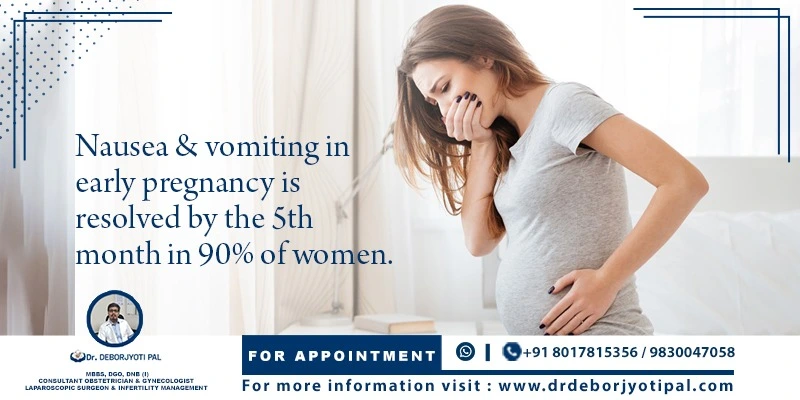
nausea and vomiting during pregnancy is a commonly encountered symptom typically starting around 5th to 7th week and resolving by the 5th month of pregnancy in 90% patients. It’s seen in (50 – 80) % of pregnant women.

A special clinical form of this is HYPEREMESIS GRAVIDARUM. Characterized by continual symptoms even on medication causing dehydration and significant weight loss in patients.

Sisters and daughters of patients with this condition have a higher chance of developing this condition in pregnancy.


Certain health conditions also have the same symptoms of –

  • Diabetic complications, Thyroid disease.
  • Migraine, Brain tumors, Ear diseases.
  • Hepatitis, Appendicitis, Pancreatic problems, Excessive acidity.
  • Psychiatric disorders, Drug side effects.
  • High BP in pregnancy, Liver disease in pregnancy.
  • Ovarian cyst complications, Uterine fibroid complications.
  • Urinary tract infection, Kidney stone.


Some patients are more at risk of nausea and vomiting during pregnancy—

  • Family history.
  • Previous personal history in earlier pregnancy.
  • Pregnancy with more than one fetus.
  • Abnormal pregnancy like Molar pregnancy.
  • History of migraine, motion sickness.
  • Low BMI.
  • Female baby.


Non-pharmacological methods to get some relief from nausea and vomiting during pregnancy—

  • Lifestyle changes –

  1. Small & frequent meals (6 meals a day)
  2. Meals should be high in carbohydrates & protein and low in fat content.
  3. Bland diet.
  4. Avoid keeping empty stomach. Eat whenever hungry.
  5. Avoid smells or foods that cause vomiting.
  6. Avoid stuffy rooms, hot places, noisy surroundings, driving on rough & undulating roads, excessive exercise.
  7. Avoid lying down immediately after eating.
  8. Drink adequate amounts of water. 2.5 lits/day should be the aim.


  • Ginger containing foods-

Small amounts of cold, clear ginger ale in between meals might help. Ginger lollipops can be useful


  • ACCUPRESSURE can be helpful in some.

WHEN SHOULD YOU SEEK MEDICAL HELP—

  • Incurable vomiting not responding to oral medications.
  • Loss of weight (2-3) kgs.
  • Dark colored urine.
  • Abdominal cramps.
  • Depressed mental state/ Thoughts of Terminating pregnancy/ Suicidal thoughts.


To know more about nausea and vomiting during pregnancy and seek help you can book an appointment with me by calling on 9830047058/8017815356 OR you can go to the appointments section on www.deborjyotipal.com

Follow Our Facebook Page: Dr. Deborjyoti Pal


WhatsApp-Image-2022-08-27-at-10.57.59-AM.jpeg
27/Aug/2022

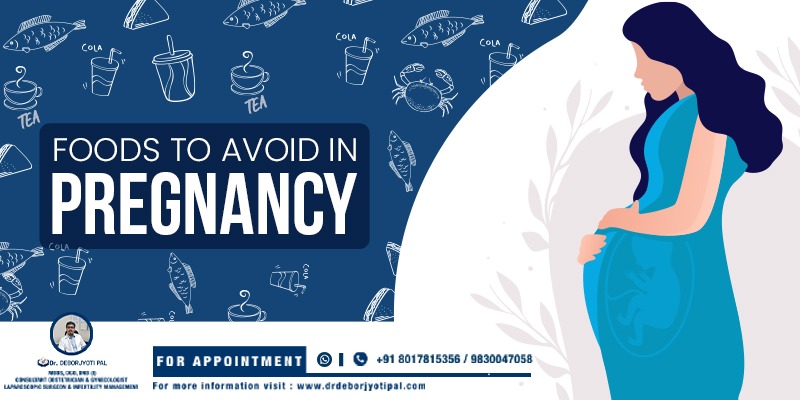
When you’re pregnant, you learn about all the foods that are off-limits. It can be hard if you love sushi, coffee, or steak. Thankfully, there are more things you can eat than things you have to avoid. To stay healthy and safe during pregnancy, here are 6 foods  to avoid or limit .

1. Avoid Seafood high in mercury during pregnancy 

Some fishes like tuna, Swordfish, king mackerel, shellfish, shark contain high levels of mercury. Avoid bigger and older fishes.Upto 350 gms of sea food a week can be allowed.Catfish, trout, tilapia, salmon, shrimp, cod, herring are
some of the fishes allowed.

Avoid raw, undercooked or contaminated sea Food. Avoid refrigerated sea food . Fishes to be cooked
Preferably to 65 degrees celsius. Fishes to be cooked till Its opaque . Oysters or mussels to be cooked till their
Shells open.

2. Herbal teas to be avoided during pregnancy

There is very little safety data about herbal tea effects on developing babies. So avoidance is safe
.

3. Caffeine Intake During Pregnancy 

Upto 200mg can be allowed a day. For perspective a cup of coffee(250ml) has 95mg same amount of tea has 50mg and 350ml cola has 30mg caffeine.

4. ALCOHOL is off -limit

Not safe in any amount in pregnancy. Avoid completely.

5. What cheeses to avoid during pregnant?

Soft cheese like feta, brie, blue cheese should be avoided. Unpausterized milk should also be avoided.

6. Avoid Undercooked meat, eggs, poultry while pregnant

Undercooked meat can cause fatal listeriosis infection .  Eggs should be completely boiled with hard yolk and egg white. Hollandaise sauce, Caesar salad dressing may contain raw egg components and should be avoided.

7. UNWASHED fruits & vegetables and RAW SPROUTS 

To know more about food habits and any other queries you may have, you can post your queries in the QUERIES section on www.deborjyotipal.com or can fix an appointment by calling on 8017815356 for face to face interaction. You can also follow Dr. Deborjyoti Pal on Facebook to get the latest gynecology updates news and tips.


WhatsApp-Image-2022-07-29-at-10.43.14-AM.jpeg
28/Jul/2022

Highlights:

  • What is the AMH test?
  • Clinical significance of AMH
  • What causes AMH levels to drop?

What is AMH?

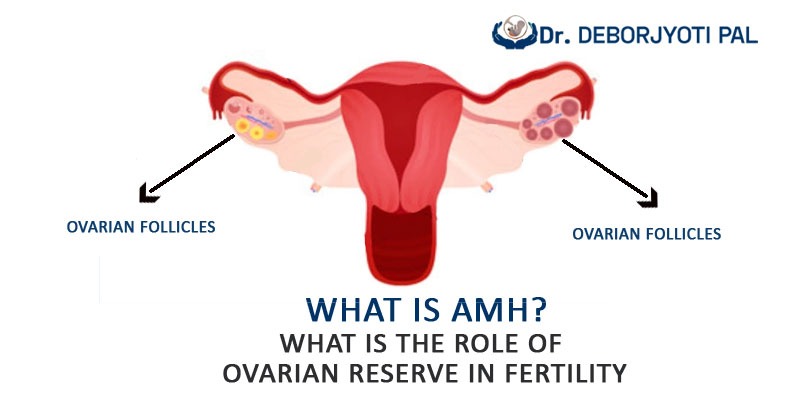
AMH (ANTI MULLERIAN HORMONE) is a chemical substance secreted by very early developing follicles in a female ovary, namely, antral and pre-antral follicles. So it indirectly gives us an idea as to the number of such follicles in the ovary of a female individual.

In females the lesser the number of such antral and preantral follicles (which later on develop in each menstrual cycle to become eggs) , the lower the AMH levels in the person’s blood and vice versa (PCOD). This is what we want to know through the AMH test in a female person’s blood.

  • AGE – Increasing the age of a woman will lead to consistently decreasing AMH levels.
  • PCOD – The serum AMH level is two- to three-fold higher among women with PCOD.
  • ENDOMETRIOSIS – It can cause the destruction of ovarian follicles by destroying normal ovarian tissue.
  • OVARIAN SURGERY – Ovarian cyst surgery can result in the removal of normal ovarian tissue or destruction of ovarian tissue by cautery leading to decreasing AMH.
  • CHEMOTHERAPY – Decreases AMH levels.
  • CONTRACEPTIVE PILLS – Long-term use can decrease levels up to 20%, but generally recovers to normal levels after 3-6 months of stoppage of pill intake.
  • OBESITY – For infertile women of later reproductive age (above 35 yrs) higher BMI causes AMH to decrease by up to one-third.

Age Group  –   AMH Range

  • < 26 yrs     –  3.6
  • 27-34 yrs   –  3.3
  • 35-39 yrs   –  1.6
  • 40-44 yrs  –   0.9
  • 45-49 yrs  –   0.3
  • 50-54 yrs –    0.05
  • > 54  yrs   –   0.01

In order to ensure that you get the best gynaecology treatment, consult the best gynaecologist in Kolkata. It is advisable to go to a clinic in your vicinity as you will not be allowed to travel long-distance right after the surgery. For example, if you live in north Kolkata, try finding a good gynaecologist in North Kolkata to perform your operation. Also, follow Dr Deborjyoti Pal on Facebook to get the latest gynaecology updates.


WhatsApp-Image-2022-07-29-at-10.43.15-AM.jpeg
28/Jul/2022

Highlights of this writeup

  • What is Tubal Patency?
  • How Tubal Patency affects infertility

What is Tubal Patency?

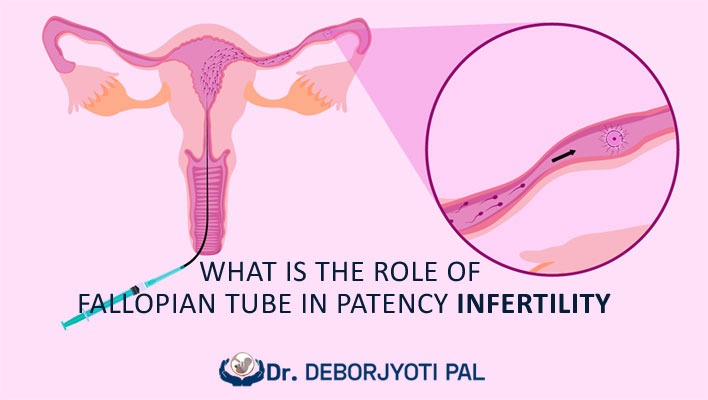
The female body has an organ named the uterus. 2 tubular structures known as fallopian tubes are attached to it on its 2 sides. These tubes are hollow inside to let things pass through it. If these tubes get blocked then nothing passes through them.

Now that we know the above, let’s know what the most important thing that passes through these is. It’s the sperms and eggs. These meet each other inside the tubes, from the early embryo and then reach back into the uterine cavity to implant into the inner uterine wall(endometrium).

So it’s clear that if these tubes lose their patency the process of sperms and eggs meeting does not happen. So no embryo is formed. This is the reason of infertility in these individuals.

NOTE: Even if one tube is patent, infertility is avoided. Its diagnosed through procedures like HSG, SIS or LAPAROSCOPY.

Blocked tubes can be opened in some cases by hysteroscopy and laparoscopy. The success of this depends on the cause of the blockage. Previous bilateral tubal clipping/ligation done as part of the contraceptive procedure is almost impossible to revert. But if tubes are blocked due to previous mild to moderate pelvic infections, reopening them is more accessible.

In order to ensure that you get the best Tubal Patency treatment, consult the best gynaecologist in Kolkata. It is advisable to go to a clinic in your vicinity as you will not be allowed to travel long-distance right after the surgery. For example, if you live in north Kolkata, try finding a good gynaecologist in North Kolkata to perform your operation. Also, follow Dr. Deborjyoti Pal on Facebook to get the latest gynaecology updates.


WhatsApp-Image-2021-11-12-at-17.50.40.jpeg
12/Nov/2021

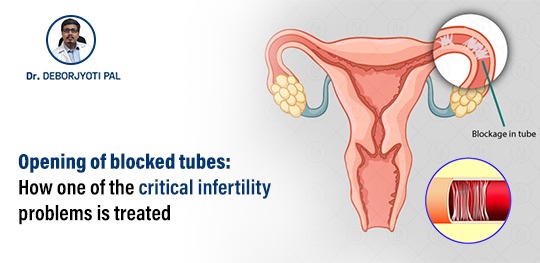
The reproductive organs found in females are the fallopian tube that acts as a connector for the ovaries to the uterus. The primary function of the tube is to support the fertilization process (merger of egg and sperm to form the embryo) in females during the period of the menstrual cycle, every month, wherein the tubes transfer an egg from the ovary to the uterus. Know about the opening of blocked tubes.

What happens when the fallopian tubes are blocked?

If the opening of the tube is blocked the pathway for sperm to reach inside the tube for fertilization is distorted with a simultaneous deterrent for the egg other way. The reasons could possibly be scar tissue, pelvic adhesions or infections. Thereby, leading to the grave issue of infertility.

Diagnosis

There are no such bodily symptoms faced by a female when the pelvic region is affected. However, there might be history of previous vaginal or uterine infection in many cases. Processes like of X-ray called Hysterosalpingography (HSG), USG called Saline Infusion Sonography is being used by medical professionals to examine the fallopian tube obstructions. These procedures might be painful. Laparoscopy can be done under general anesthesia to find out patency of tubes in a completely painless procedure. These treatment procedures is provided by

● Dr Deborjyoti Pal
A male Gynecologist with a degree in MBBS, DGO and DNB(I) Consultant Obstetrician. His official website says: “A happy family is made of healthy women.” He is one of the highly trusted Gynecologist near Sodepur. He also confers a fruitful and safe hysteroscopy treatment in Barrackpore.

After diagnosing the core reason of infertility as the closure of fallopian tubes, doctors perform the following treatment to settle down the problem of infertility in females.

● Hysteroscopy and tubal culation
● Through Laparoscopic surgery, less intense scar tissue is removed from around the tubes.
● But if the scar adhesions are spread in a large-scale area, then there’s no possible treatment to cure it. However, the process of healing can be gradual.
● If a part of the tube is damaged, perhaps due to ectopic pregnancy or mild infection, then the surgeon will discard the affected part.

The problem of infertility can be cured by using the above-mentioned treatments, however, patience is the key element here!


WhatsApp-Image-2021-10-04-at-11.29.16.jpeg
29/Sep/2021

There are several options available for birth control but people like to embrace the ones that have 100% success and only the permanent and semi-permanent methods give you that assurance. Laparoscopic tubal ligation is the removal or obstruction of the fallopian tubes resulting in zero chances of further pregnancies. The function of the fallopian tubes is to receive eggs and sperms and give them a place to meet ,forming an embryo and then transport them to the uterus where they will be implanted. Once the fallopian tubes are removed or obstructed, the sperms cannot reach the egg.

It is considered one of the safest and surest methods to avoid getting pregnant. However, make sure that you go to only the best laparoscopic surgeon in Kolkata to get your surgery done. While it is a simple operation, it requires steady hands.

Why is Laparoscopic Tubal Ligation the Best Method?

  • It is a permanent birth control method and thus you need not worry every time you run late on your monthly cycle. It also saves all the money you spend on temporary birth control methods like condoms.
  • Ligation is among the most effective birth control methods.
  • It does not require you to stay in the hospital for a long period of time. It is often an outpatient surgery which means the patient can be discharged on the same day as the operation.
  • It does not cause any changes in your menses.
  • It does not trigger major hormonal changes that can lead to negative effects on the body.
  • Your body needs very little or no recovery time at all. You can resume work right after the surgery.
  • It has fewer failure rates and fewer complications as compared to other surgeries.

What to Expect After Ligation?

Although it is absolutely safe and does not require you to take much care, there are still certain mild discomforts that you might face after the surgery.

  • Soar throat and mild nausea.
  • Vaginal bleeding up to a month post-surgery
  • Bloated abdomen

These are some of the most common discomforts. However, if you experience pain, report to your doctor.

In order to ensure that you get the best treatment, consult the best gynecologist in Kolkata. It is advisable to go to a clinic in your vicinity as you will not be allowed to travel long-distance right after the surgery. For example, if you live in north Kolkata, try finding a good gynecologist in North Kolkata to perform your operation.

Follow our facebook page: www.facebook.com/drdeborjyotipal


WhatsApp-Image-2021-09-02-at-11.32.50.jpeg
01/Sep/2021

Fibroids: Explained

In simple words, fibroids are a sort of tumour that grow in the muscle of uterine wall and are highly common in women. These are very rarely cancerous in nature and can vary in size and location, from person to person. In most cases, there are no symptoms but the ones who show symptoms have a hard time moving ahead with their day to day life.

Concern Areas of Fibroids

There are three different types of fibroids that can grow in the uterus wall. They are called subserosal that grow outside the uterus wall, submucosal that grows within the uterus cavity, and intramural that grows within the uterus wall. The potential symptoms and risks with untreated fibroids include-

1. Heaviness in the lower abdomen
2. Multiple frequent runs to the bathroom
3. Painful sexual intercourse
4. Increased bleeding and pain lower abdomen during the menstrual cycle
5. Complications and other concerns regarding pregnancy like increased risk during C section deliveries

Though most cases of uterus fibroids do not pose any harm to the female body, it is important to look out for the symptoms and get yourself checked by the best gynaecologist in Kolkata at least every 6 months. Dr. Deborjyoti Pal is one such gynaecologist in North Kolkata that is known to offer the best medical treatment for fibroids.

Some of the common procedures to examine it include an ultrasound of the lower abdomen, CT scan, MRI, etc. This helps Dr. Deborjyoti Pal suggest the right treatment or surgery which is necessary for curing the concern of uterine fibroids. The two common surgeries for treatment include laparoscopic/hysteroscopic or open myomectomy.

To conclude, uterus fibroids are very common and usually found in women of all age groups. Almost all fibroids are benign in nature and do not threaten the life of the patients. However, the intensity of the symptoms is the main deciding factor to diagnose the issue and get the right help and treatment to help you live a stress-free and healthy life ahead.

Follow our facebook page: www.facebook.com/drdeborjyotipal


WhatsApp-Image-2021-09-02-at-11.32.51.jpeg
01/Sep/2021

One of the biggest contributing factors determining female fertility success is the ability of the egg to move and fertilise with the sperm. However, at times, there can be potential concerns with the fallopian tubes that restrict this fertilisation process.

A laparoscopic dye test is known to be one of the most effective surgical procedures to diagnose infertility issues, relating to the fallopian tubes that might reduce the chances of pregnancy in females. Through this dye test, an evaluation of the fallopian tubes is conducted to recognize and treat any kind of blockage within the fallopian tubes, and rectifying the same with affordable infertility treatment in North Kolkata.

How does Laparoscopic Dye Work?

The laparoscopic dye test procedure is also called keyhole surgery as it ensures minimal invasion of the body. A thin tube with a light and camera is inserted with the help of a small incision around the navel on the stomach. This entire procedure takes approximately 15-20 minutes and is performed by a laparoscopic surgeon in North Kolkata. Gas is introduced into your abdomen and then a tube with camera and light mechanism will be inserted into the abdominal cavity. Dye is then introduced into the uterine cavity through the cervix with the help of another hollow metal tube, the dye enters the fallopian tubes and from there into the abdominal cavity if the tubes are patent.

With the help of a laparoscopic dye test, it also helps the gynaecologists get a better insight into other abnormalities of tubes, ovary and uterus which are contributing to infertility.

Things to Remember

1. Restricted eating and drinking 8 hours before procedure.
2. Take antibiotics, if and as recommended by the gynaecologist.
3. There might be little pain and soreness post the procedure is complete
4. There might be sharp pains in the shoulder too, for a little while
5. Rest for a minimum of two to three days is recommended
6. There might also be some bloating for a little while as gas is used in the procedure

For this treatment, all you need to do is reach out to one of the best laparoscopic surgeon in Kolkata like Dr. Debrojyoti Pal to receive effective and affordable infertility treatment in North Kolkata. He is highly skilled and knowledgeable and offers exceptional services in Kolkata. Reach out for support and guidance today.

Follow our facebook page: www.facebook.com/drdeborjyotipal


WhatsApp-Image-2021-07-24-at-18.58.06.jpeg
26/Jul/2021

There are a number of options that you can opt for if you are not willing to get pregnant while breastfeeding. But in order to know the complete details of whether it is going to be alright for you to opt for contraceptives while breastfeeding, it is highly recommended to take advice from Dr Deborjyoti or any of the gynaecologist near Sodepur. However, it is widely known that breastfeeding itself is a superb form of birth control.
One can rely on it only when you are breastfeeding your baby within the first six months. In order to make it work, you need to follow exclusive breastfeeding without offering any food supplement.

Besides breastfeeding, there is an ample number of alternatives for preventing pregnancy. Some of the most beneficial options are:

Progesterone only Pill:

This is known to be one of the best and most effective options for birth control during lactation but only if you can remember to take all of it regularly every day at the same time.

Barrier Methods:

As the name suggests, the barriers block the entry of the sperm to the uterus.

Intrauterine devices:

This is another heavily effective method that is available in two different forms, hormonal and non-hormonal. Consult with your doctor before finalising which one you should opt for.

Is it safe to use the morning after pill during breastfeeding?

If you have opted for birth control and if it has failed, you can definitely prefer to consume the morning-after pill while breastfeeding. However, make sure not to treat it as the only option. Go for this one, only when the regular form of birth control methods have failed.

But make sure to consult with the best gynaecologist in Kolkata if you notice any abnormality for a long period.

Bottom Line

There are a number of safe birth control options which you can opt for if you are not ready to conceive while breastfeeding your newborn. However, in order to know which one is going to suit you the most and will be the most beneficial one, it is better to consult with a gynaecologist in North Kolkata.

Follow our facebook page: www.facebook.com/drdeborjyotipal


Dr Deborjyoti Pal - top gynecologist in Sodepur, Kolkata

Consultant Obstetrician & Gynaecologist


Consultant Obstetrician & Gynaecologist


About Dr. Deborjyoti Pal

MBBS, DGO, DNB(I)

Consultant Obstetrician & Gynaecologist

Laparoscopic Surgeon & Infertility Management

Attached to Bellevue Clinic & Birth Fertility Clinic

+91 98300 47058


24/7 EMERGENCY NUMBER

Call us now if you are in a medical emergency need, we will reply swiftly and provide you with a medical aid.


deborjyotipal@outlook.com


Copyright by Dr. Deborjyoti Pal 2020. All rights reserved. Design by Seven Boats


Copyright by Dr. Deborjyoti Pal 2020. All rights reserved. Design by Seven Boats