

drdeborjyotipal, Author at Dr Deborjyoti Pal

Blue-White-Simple-Financial-Tips-Blog-Banner-1-1-1200x675.jpg
31/Oct/2023

• Early mobility is preferred. It decreases the chances of urinary retention, constipation, blood clots in legs and also drainage of post delivery unnecessary materials from the uterus
• Discharge from hospital (if no complications) should be within 2 days in a case of vaginal delivery & within 4 days in case of cesarean delivery.
• Mother should food according to her choice in adequate amounts. It should contain adequate amounts of proteins, carbohydrates, fats, vitamins and micronutrients. Can take advice from nutritionists if needed. Breast feeding mothers need higher caloric intake in their food (500 calories extra than non breast feeding women).
• Adequate sleep is needed. So any problems leading to less sleep for the new mother should be dealt with promptly.
• Constipation after delivery should be treated with food having high leafy vegetable content, lots of oral water intake (3 lit/day) and if needed laxatives can be used.
• Mother should try and pass urine as early as possible after a vaginal delivery. If passing urine becomes a problem due to pain in stitches or less bladder tone then an urinary catheter is inserted to evacuate urine. The catheter can be kept inserted into the bladder till bladder tone returns. In case of cesarean delivery same principle to be followed after removing urinary catheter inserted during the operation.
• Post vaginal delivery the vaginal and perineal stitch area should be kept clean & dry. Area should be washed with soap & water after every act of urination & defecation. Wiped with dry clean cloth. For initial 2 weeks an antibiotic ointment can be used to apply on perineal wound.

• Breast care

  • Wear a nursing bra that fits well but is not too tight or restrictive, but actually supports the breasts well. Avoid underwired bra.
  • Take daily bath. Wash breast with normal water only. Do not use soap as it causes cracked nipples by removing the protective coating on nipple and areola, derived from natural secretions of glands around the nipples.
  • Nipple should be washed with water and cotton before & after each feed and kept dry between feeds.
  • Change nursing pads if they become soiled or wet.

• Rooming-in

Hospital practice where mothers and normal babies stay together in the same room, all day from after delivery. This is to be practiced as it creates the much needed bonding between the baby and the mother. Helps in early initiation and sustenance of breast feeding. Also helps in making the mother conversant with the babies everyday habits and behaviour helping the mother to better raise their children.

• Vaccines

  • Rubella vaccine if not given before pregnancy & mother in non immune to rubella virus.
  • In Rh (-)ve mothers with Rh(+)ve babies Anti-D immunoglobulin injection has to be given within 72 hours of delivery.
  • TDaP vaccine if missed in pregnancy.

Here I have tried to focus in brief about important aspects of normal post delivery care for mothers. This is certainly not an exhaustive discussion but any other queries can be dealt with adequately by your gynecologist or baby doctor if needed. You can also mail your queries to deborjyotipalqueries@outlook.com.

Blue-White-Simple-Financial-Tips-Blog-Banner-2-1200x675.jpg
04/Oct/2023

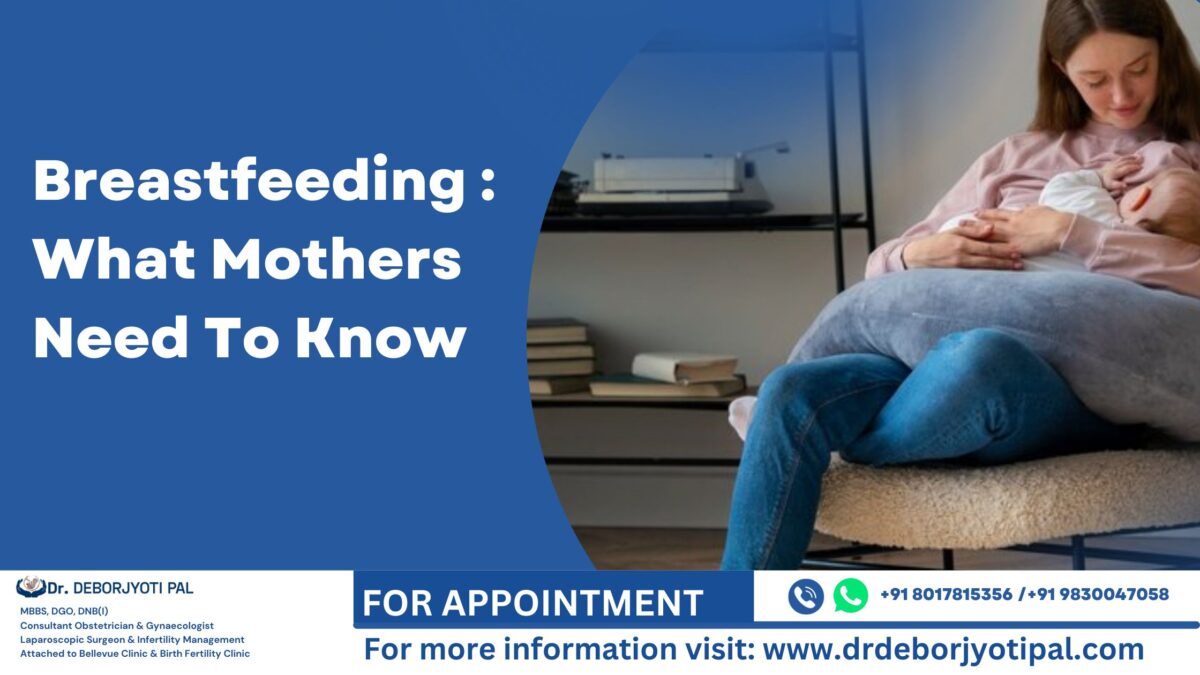
Definition: The production & secretion of milk by mammary glands in the breast.

This happens in 4 stages during pregnancy and after delivery.

  •  During pregnancy breast tissue proliferates resulting in increase of ducts and sacs for storage of milk needed for breast feeding. This is the stage of MAMMOGENESIS.
  • Milk secretion occurs into the numerous sacs developed in the previous stage under the influence of a hormone- prolactin, after the delivery of baby. This occurs around 3 to 5 days after delivery. This does not occur in pregnancy as high levels of estrogen & progesterone hormone inhibits the effect of prolactin. After delivery levels of estrogen & progesterone decrease substantially. This is the stage of LACTOGENESIS.
  • This is the stage when milk secreted into the numerous small sacs in breast tissue is pumped out into the bigger ducts of the breast near the nipple from where it can be expressed by mother or the child can suck it. Happens due to contractions of minute muscles in the sac walls under the influence of OXYTOCIN hormone. This is produced in the mothers brain when the baby sucks on the mother’s breast. So frequent suckling of breast by baby is essential for milk ejection from breast. This is the stage of GALACTOKINESIS.
  • Sustenance of milk production is possible only by regular suckling of maternal breast by baby following proper technique. Avoidance of mental stress and breast engorgement is essential for this stage of GALACTOPOIESIS.

IMPORTANT STEPS FOR EARLY INITIATION OF MILK PRODUCTION:

  • Put the baby to mother’s breast within 1 hour of birth.
  • Encourage mother to drink plenty of fluids.
  • Let the baby suck mother’s breast every 2-3 hours as needed.
  • Avoid mental stress, breast engorgement.
  • Completely avoid feeding anything else to the baby (EXCLUSIVE BREAST FEEDING).
  • Avoid bottle feeding.

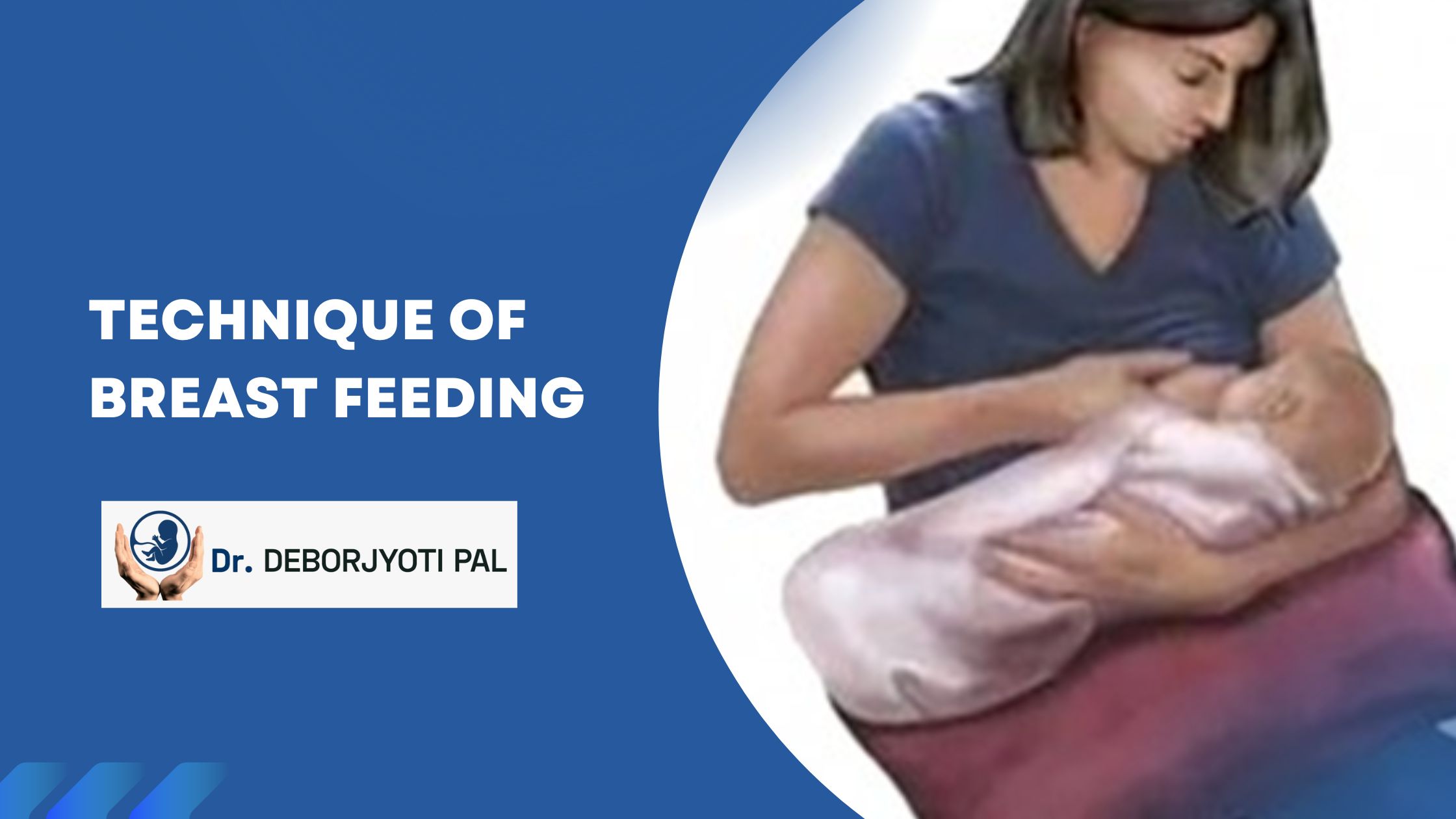
TECHNIQUE OF BREASTFEEDING:

Support the baby on the arm of the same side as the breast you want to feed from. Sit up straight — preferably in a chair with armrests. Cradle your baby in an arm, with your baby’s head resting comfortably in the crook of your elbow while he or she faces your breast. For extra support, place a pillow on your lap.

For any problems or queries about breast feeding consult your gynecologist or pediatrician for proper management.


WhatsApp-Image-2022-12-07-at-16.22.53-1200x600.jpg
07/Dec/2022

Pregnant Mother With Negative Blood Group

WHAT IS A NEGATIVE BLOOD GROUP?

To understand this simply, you need to know that red blood cells(RBC) in the human body have certain proteins on their surface. There can be many types, but the most predominantly used blood grouping system “ABO blood grouping” uses proteins by the name A & B.

When an RBC has an ‘A’ protein on them is blood group A, with a ‘B’ protein on them is blood group B, with both proteins on them its blood group is ‘AB’ and with neither of these proteins present on them, its blood group is ‘O’.

There is also another protein known as ‘RhD’. If this is present on the RBC then the blood group is ‘+’ve. If this protein is not present then the blood group is negative.

So if you have ‘A’ protein on your RBC and no ‘RhD’ protein, then the blood group is ‘A (-)ve’. Every other blood group is determined this way.

WHY IS IT IMPORTANT?

Now we need to know that if a (-)ve blood group woman marries a (+)ve blood group man and gets pregnant with him, then there is a chance that the baby in the womb may have (+)ve blood group. If that is the case then in the first pregnancy, some RBCs of the baby pass into the mother’s blood due to various reasons (elaborated later), which

produces antibodies against the ‘RhD’ protein on the baby’s RBC.

This antibody development if not prevented can cause dire consequences in future pregnancies, causing severe anemia in the baby and also the death of the baby before or after delivery in all future pregnancies.

SOME REASONS FOR A BABY’S BLOOD MIXING WITH MOTHER’S?

  • Induced
  • Spontaneous miscarriage.
  • Any bleeding inside the uterus during
  • Any diagnostic procedure like Amniocentesis, Chorionic villous biopsy.
  • Normally at certain times in the pregnancy.

GYNECOLOGIST’S ROLE?

Pregnant women with negative blood groups should therefore always be under regular supervision during their pregnancy, giving the gynecologist adequate opportunity to detect the development of these antibodies & also take preventive measures against their development.

To know more about this condition and seek help you can book an appointment with me by calling on 9830047058/8017815356 OR you can go to the appointments section on deborjyotipal.com

Read our other blog What is Poly Cystic Ovarian Disease?-MYTHS & REALITIES


Rubella-infection-status-1200x600.jpg
01/Dec/2022

What is the rubella virus?

Well by the name itself you know now, that it’s a virus. Also known as GERMAN MEASLES, it’s highly contagious, causing a rash, malaise, fever, headache, cough, and cold.

How does it spread?

Its spread is mostly through the respiratory tract and oral secretions, when an infected person coughs or sneezes it spreads to others through droplets released in the air. Can also spread, through direct contact with mucus or oral secretions like the saliva of an infected person.

The route of spread that is most important for this article is from mother to fetus through the placenta during pregnancy.

How does it affect the unborn baby?

Rubella infection at any stage in pregnancy can cause miscarriage or stillbirth of the fetus. But it is particularly dangerous if infection occurs during the first 12 weeks of pregnancy. This results in almost 90% of babies being born with

CONGENITAL RUBELLA SYNDROME. Some features of this

Syndrome is:

  1. Cataract
  2. Deafness
  3. Low birth weight
  4. Developmental defects in the heart, liver, spleen, brain, Lungs, etc.
  5. Problem with mental development and intellectual abilities.
  6. Thyroid gland & hormone problems.

What is the treatment for Rubella Virus?

Once you are infected there is no medicine to get rid of the infection. The disease is self-healing and will run its course.

Treatment mainly is symptomatic to treat symptoms like cough, headache, sneezing, fever, etc. Generally, all symptoms subside within 5 days from onset.

Prevention

Vaccination against it is the only prevention. MMR vaccine prevents the disease. It is generally given to children in 3 doses, 1st between 9-12 months, 2nd between 15-18 months & 3rd between 4-6 years of age. All women of reproductive age should undergo rubella antibody testing before getting pregnant, and take the rubella vaccine before pregnancy if not already immune. It is available as a standalone vaccine as well as part of the MMR vaccine. It is to be taken at least 4 weeks before planning for pregnancy.

To know more about this and seek help you can book an

Appointment with me by calling on 9830047058/8017815356

OR you can go to the appointments section on

www.deborjyotipal.com

Visit our Facebook page to see more informative posts like this from Dr. Deborjyoti Pal

Read our other blog What food to avoid during pregnancy


WhatsApp-Image-2022-10-29-at-16.50.04-1200x600.jpeg
29/Oct/2022

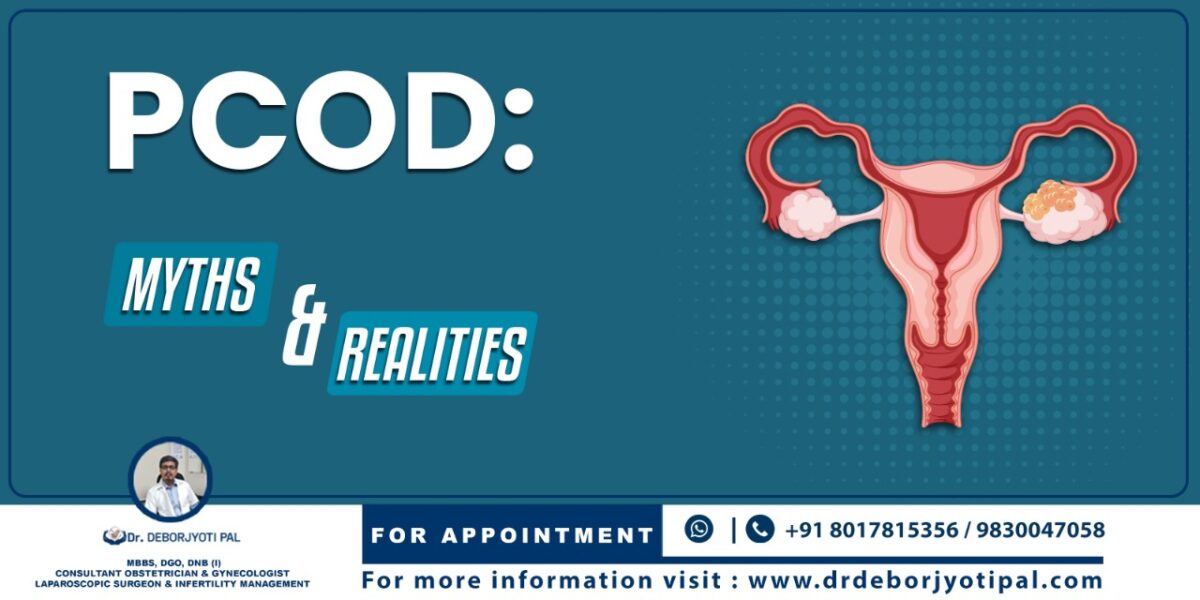
Poly Cystic Ovarian Disease
  • Is it a disease and is it curable?

    It’s a HORMONAL condition caused by genetic influences in your body. Your own genes are responsible for creating this. The severity of the condition depends on how much of an influence your genes can exert. As it’s not a disease so it’s not curable. It’s not very harmful to have Poly Cystic Ovarian Disease if you can abide by a few small rules. You should ensure that you have normal periods. And after marriage, you can always take the help of a doctor to conceive if you have been unable to do so after 1 full year of unprotected sex.

  • Is Poly Cystic Ovarian Disease dangerous? How can it harm me?

    It’s in no way dangerous or fatal.
    The only 2 ways it causes problems are−−
    1. It causes delayed release of eggs from your ovaries, causing delayed periods, sometimes very delayed. If regular periods are not insured by medication, endometrial cancer may occur.
    2. Due to delayed and unpredictable times of egg release, it becomes very hard for couples to time their sexual intercourse with the egg release times, causing delayed pregnancies.

  • Is it a form of ovarian cyst?

    NO. It is not a form of ovarian cyst. It is in no way a cyst. Does not need surgery for the removal of the cyst.

  • What can be the long-term effects?

    Diabetes, High Blood Pressure, Blood Lipid irregularities.

  • How can I manage Poly Cystic Ovarian Disease?

    Take a gynecologist’s help on these matters. It’s easily manageable on most occasions. Also, take special care of your lifestyle. What do you eat? Whether you live a sedentary life? Are you gaining weight and getting fat?
    Bring some regular physical activity into your life. Decrease intake of food having high carbohydrate and fat content. Aerated drinks intake should be minimum. Take the help of a dietician.
    Don’t be negligent towards missed periods. And always take help if you are having trouble getting pregnant. You will be surprised to hear that 80% of women with PCOD get pregnant with no or minimal medical intervention.

REST ASSURED. PCOD IS NEITHER A DISEASE NOR LIFE-THREATENING.

If you want to know more about Poly Cystic Ovarian Disease you can consult Dr. Deborjyoti Pal best gynecologist in Kolkata

Also check out our Facebook page here Dr. Deborjyoti Pal


WhatsApp-Image-2022-10-07-at-13.40.02.jpeg
07/Oct/2022

In continuation of my earlier blog in the series ‘USG IN PREGNANCY (PART 1)’, I will give information about the scans done between weeks 13 to 29 of pregnancy, and their clinical importance.

  • 18-20 weeks –

    ANOMALY SCAN’. As the name suggests we try to find out any anomalies or abnormalities in the structural growth of the baby. External and internal organs are checked for anomalies.

  •  22-24 weeks—

‘CERVICAL LENGTH’ Studies have proved that the length of the cervix (the lower opening of the uterus from where the baby comes out in a normal delivery), has a good predictive value for preterm vaginal delivery at around 28-30 weeks. The general consensus is that the length of the cervix should be more than 2.5 cm at this time & should not be showing constant decreasing length from earlier scans for assurance about chances of early delivery being high.

FETAL ECHOCARDIOGRAPHY’ is also done during this time to recheck if the heart of the baby has no anomalies (if it had been missed earlier during the ANOMALY scan).

There is also a way to predict the development of maternal high blood pressure and slow growth of the baby in late pregnancy, by seeing the speed of flow of blood and its variations in the arteries of the uterus at this time of the scan.

  • 28 weeks—

    This usg is done to find out if the baby is growing well corresponding to the age of the pregnancy. Moreover, the amount of fluid around the baby, baby weight, placental maturity, baby movements, breathing actions, and placenta location changes in case of the low-lying placenta in earlier scans are some of the other important things noted.


 In my 3 part blog on this topic, I have elaborated on ultrasonographic in various phases of pregnancy and each of their importance. To know more on this topic you can mail me at deborjyotipalqueries@outlook.com.

Read USG In Pregnancy Part 1 Here

You can also book appointments with me by calling on 9830047058/8017815356 OR you can go to the appointments section on www.deborjyotipal.com.

Follow our Facebook page for more – Dr. Deborjyoti Pal


WhatsApp-Image-2022-10-07-at-11.40.52.jpeg
07/Oct/2022

  • WHAT IS USG?

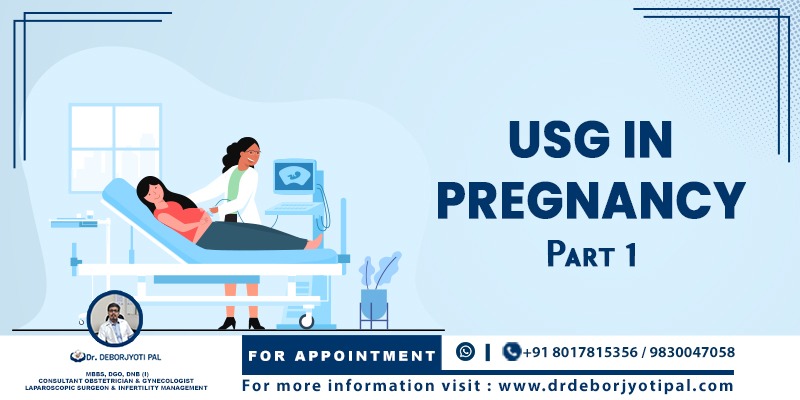
USG or Ultrasonography is a very commonly used investigation in pregnancy. The basic mechanism is that sound waves are emitted by the usg probe placed on the abdomen or inside the vagina, which gets reflected back to the probe from the various structures of the baby and around it, to then be converted into an image on the usg machine screen.

Many patients fear that there are harmful rays in usg that may harm the fetus. But there are no such rays in usg, I can assure you all of that.

  • PURPOSE: usg done at specific times during the pregnancy period to get information about how the pregnancy is developing, detect the possible presence of developmental defects both at structural and genetic levels & predict the development of certain harmful conditions in the developing baby, so that actions can be taken to prevent those harmful conditions from developing.
  • TIMINGS & PURPOSE OF EACH USG:

  • 6-8 weeks—Known as the ‘DATING SCAN’. It accurately gives the age of the fetus. Moreover, it detects for the first time the presence of a heartbeat in the baby. Importantly it also detects the number of developing babies and the exact location of the pregnancy. (Pregnancy developing in any location other than inside the uterus is known as ECTOPIC pregnancy & is very dangerous for the mother, sometimes leading to death if not detected early enough or not treated properly)


  • 11-14 weeks—‘NT SCAN’. Simply speaking, the length of a translucent area at the back of the baby’s neck is measured. Also, the presence of nasal bone is looked for. Certain blood tests are done with maternal blood. All these data along with the maternal age at conception is taken into consideration for calculating the probability of the presence of certain chromosomal disorders and structural defects in the developing baby. Reported as ‘HIGH RISK’ or ‘LOW RISK’. High-risk mothers are evaluated more for coming to a definitive diagnosis.

Also, the location of the developing placenta (the organ that is responsible for supplying all nutrition and oxygen to the baby) is noted in this scan. Location is important as the placenta develops in the lower part, close to the lower opening of the uterus is a major concern, as it can result in repeated minor/major bleeding episodes in pregnancy, which keeps the gynecologist on his/her toes.

Read USG In Pregnancy Part 2 Here

In my 3 part blog on this topic, I have elaborated on ultrasonography in various phases of pregnancy and each of their importance. To know more on this topic you can mail me at deborjyotipalqueries@outlook.com.
You can also book appointments with me by calling on 9830047058/8017815356 OR you can go to the appointments section on www.deborjyotipal.com.


WhatsApp-Image-2022-09-27-at-12.58.18.jpeg
27/Sep/2022

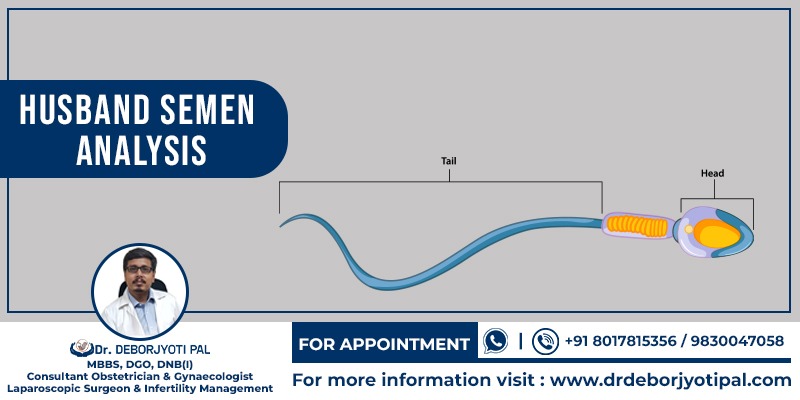
WHAT IS SEMEN ANALYSIS?

Examination of semen or semen analysis of an individual to determine its quality with respect to parameters of motility of individual sperms, morphology (how each sperm looks) of individual sperms, and the total number of sperms per ml of seminal fluid (in the main).

Other parameters also looked into are volume of seminal fluid per masturbation, pH of seminal fluid, the total number of sperms in the sample, functional sperm concentration, and presence of red blood cells or pus cells.

• COLLECTION FOR SEMEN ANALYSIS–

The sample should be collected in a sterile container. Collected either after masturbation or after having sex by withdrawal method and in rare instances by electrically stimulated masturbation.

• PREREQUISITES BEFORE COLLECTION –

1. Complete avoidance of sexual activity and masturbation for a minimum of 2 days to a maximum of 7 days before sample collection.(WHO CRITERIA)
2. Avoid alcohol, caffeine, and drugs such
as cocaine and marijuana two to five days before the test.
3. Avoid any hormonal or herbal medications.
4. Don’t use lubricants when you collect your sample.
5. If you collect your sample at home, you’ll have to keep it at room temperature and get it to your doctor or lab within 1 hour.

• WHO CRITERIA FOR A NORMAL SEMEN SAMPLE FOR SEMEN ANALYSIS

PARAMETER MINIMUM REQUIREMENT

Semen volume – 1.5 ml
Semen sample – pH >|= 7.2
Total semen number – 39 million/ejaculate
Semen concentration – 15 million/ml
Total motile sperm % – 40% of total sperm number
Progressively motile % – 32% of total sperm number
Normal morphology 4% – of total sperm number
Leucocytes (indicates infection) – < 1 milliom/ml

• TO KNOW MORE ABOUT THIS & OTHER INFERTILITY CAUSES & SOLUTIONS you can book an appointment with Dr. DEBORJYOTI PAL by calling on (9830047058/ 8017815356) OR Email him on [deborjyotipalqueries@outlook.com].


WhatsApp-Image-2022-09-27-at-13.18.02.jpeg
27/Sep/2022

If you are having difficulty to conceive and thinking about consulting a doctor you may expect certain things. Firstly the doctor would like to know how long have you been trying to conceive, by having unprotected sex. Next would like to know few things like-

  • couple’s age and also how long you have been married.
  • Whether you have had kids before and whether there have been any abortions or miscarriages.
  • Whether you have regular periods and when was your date of last menstruation.
  • Presence of any medical disease in any one of the couple. Any previous surgeries undergone by any one of the couples.
  • Any medication allergies or any medication being taken regularly by the couple.
  • Also any addictions present.
  • What has been the previous treatment received by the couple with respect to conception.

Then you will be directed towards doing certain specific investigations/tests to identify any problems in the conception process. Once those reports are done and the cause/causes of difficulty in getting pregnant is known, those are to be treated first, and then the main treatment for helping the patient to conceive begins.

THE COMMON THINGS INVESTIGATED ARE—

• The ovarian reserve of the wife.
• The semen quality of the husband.
• Whether the 2 tubes on both sides of the female uterus are open and patent.
• Whether there exists any hormonal disturbance in the wife that can cause failed ovulation.

• TO KNOW MORE ABOUT DIFFICULTY TO CONCEIVE & OTHER INFERTILITY CAUSES & SOLUTIONS you can book an appointment with Dr. DEBORJYOTI PAL by calling on (9830047058/ 8017815356) OR Email him on [deborjyotipalqueries@outlook.com]

Visit Our Facebook Page


WhatsApp-Image-2022-09-23-at-18.34.19.jpeg
23/Sep/2022

DEFINITION—

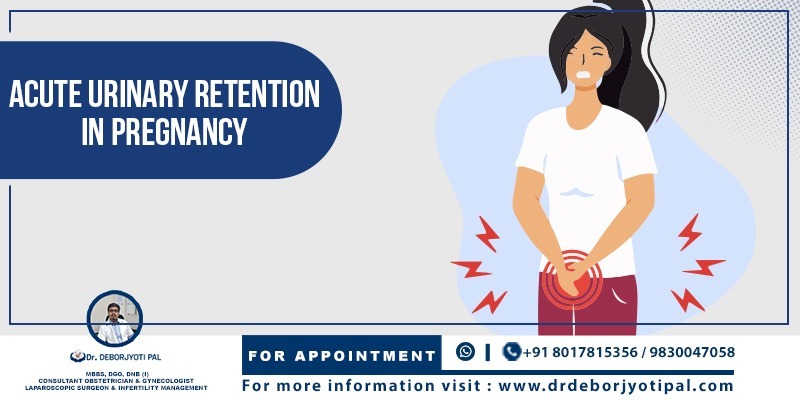
Acute and sudden development of inability to pass urine on one’s own will.
Sometimes it is accompanied by lower abdominal pain due to overdistension of the urinary bladder with huge amounts of stored urine if the inability persists for an appreciable amount of time.
Acute urinary retention occurs in approx. 4 to 5 pregnant women out of every 1000. In some studies, its occurrence is as low as 1 in 3000 pregnancies.

TIME OF OCCURRENCE—

Mostly occurs between the 10th to 16th week of pregnancy.

CAUSES—

• Most commonly there is dysfunction of urethral sphincter relaxation.
• Woman aged 35 or more during pregnancy.
• Previous abortion.
• Endometriosis.
• Recurrent history of pelvic infection.
• Women born with deformities of the uterus.
• Fibroid uterus.
• Abnormal shape of the pelvis.
• Urinary tract infection.

SYMPTOMS OF ACUTE URINARY RETENTION—

• Distress in passing urine with decreased flow requiring more effort.
• Stop starting flow during passing urine.
• Non-passage of urine causing bladder distension and pain in the lower belly.

CONSEQUENCES-

In advanced cases bladder rupture, hydronephrosis, Acute renal failure, and spontaneous abortion.

WHAT TO DO REGARDING ACUTE URINARY RETENTION IN PREGNANCY—

Early recognition of these symptoms and information passage to your gynecologist as early as possible is a must, to avoid severe consequences. Hospitalization and continuous catheter placement inside the bladder might be necessary for 48 hours. If managed properly and on time severe complications can be easily avoided. Post-discharge from the hospital, you might be prescribed certain exercises, which need to be done without fail.

To know more about this and seek help you can book an appointment with me by calling on 9830047058/8017815356 OR you can go to the appointments section on www.deborjyotipal.com.


Dr Deborjyoti Pal - top gynecologist in Sodepur, Kolkata

Consultant Obstetrician & Gynaecologist


Consultant Obstetrician & Gynaecologist


About Dr. Deborjyoti Pal

MBBS, DGO, DNB(I)

Consultant Obstetrician & Gynaecologist

Laparoscopic Surgeon & Infertility Management

Attached to Bellevue Clinic & Birth Fertility Clinic

+91 98300 47058


24/7 EMERGENCY NUMBER

Call us now if you are in a medical emergency need, we will reply swiftly and provide you with a medical aid.


deborjyotipal@outlook.com


Copyright by Dr. Deborjyoti Pal 2020. All rights reserved. Design by Seven Boats


Copyright by Dr. Deborjyoti Pal 2020. All rights reserved. Design by Seven Boats